IGNOU BZYCT-137 (January 2026 – December 2026) Assignment Questions
1. Explain Trisomy 21 (Down’s Syndrome) and Trisomy 18 (Edward’s Syndrome) in detail.
2. Write short notes on the following:
a). Dosage Compensation in Humans
b). Double Helical Structure of DNA
3. What is mutation? Explain mutagenesis and significance of mutation in detail.
4. a). Explain briefly the impacts of Miller’s experiments on the theory of origin of life.
b). Discuss “struggle for existence” with reference to evolution.
5. “Industrial melanism is an excellent example to demonstrate the natural selection”. Justify the statement.
6. Write the differences between the following pairs:
a). Allopatric and Sympatric speciation
b). Pre-mating and Post-mating isolation
c). Extinction and Pseudoextinction
d). Homologous and Analogous organs
7. a). Define the following terms:
i). Gene
ii). Homozygous
iii). Position effect
iv). Vestigial organs
v). Wallace effect
b). Match the following:
Column A Column B
i). Meselson and Stahl a) Pre-zygotic and post-zygotic
ii). Codominance b) Centromere is in middle
iii). Metacentric c) DNA replication is semiconservative
iv). Watson d) Both the alleles are equally expressed
v). Reproductive isolating barriers e) Established the existence of catalytic RNAs
8.Explain the clinical significance of Rh antigens in human blood.
9.a). Explain why did Mendel select pea plants for his experiments.
b). What is crossing over? Give any four features of crossing over.
10.a). “In small populations, the gene frequencies often tend to drift.” Justify the statement giving suitable example.
b). Enlist the various changes that took place in the evolution of horse (any five).
IGNOU BZYCT-137 (January 2025 – December 2025) Assignment Questions
1. i) How is co-dominance different from incomplete dominance?
ii) Explain the phenomenon of masking the expression of a gene by another in epistasis.
2. i) In Drosophila, the recessive, sex-linked genes, abnormal eyes facet (fa) and singed bristles (sn) show 18 percent recombination.
a) If a singed male is crossed to a fa+/fa+ female, what phenotypes are expected in the F1?
b) If the F1 males and females are inbred, what phenotypic proportions would be expected to occur in F2 males and females?
ii) Two recessive genes, ds and mp are present in corn. These are linked and are 20 map units apart. From the cross:
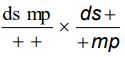
What percentage of the progeny would be expected to be both ds and mp in the phenotype?
3. a) In the following statements, choose the alternate correct word given in parenthesis.
i) The DNA regions in chloroplast could be observed under (light microscope/electron microscope).
ii) The regions containing cpDNA are called (nucleoids/celluloids).
iii) Each nucleoid contains (a single/a few) copies of DNA.
iv) The cpDNA and mtDNA are usually (circular/linear) in nature.
v) Both chloroplast and mitochondria contain (a few/many) copies of DNA.
vi) The mtDNA of yeast is (bigger/smaller) than mtDNA of humans.
vii) The occurrence of introns is discovered in (yeast/human).
b) Which among the following statements are correct?
i) Mitochondria contain 80 S ribosomes.
ii) The mRNA encoded by nuclear genes for the smaller subunit of RuBisCo is translated in the chloroplast.
iii) The inheritance of chloroplast genome is independent of nuclear genome.
4. i) Define mutation. Explain the following types of mutations briefly:
a) Induced mutations
b) Suppressor mutations
ii) What are transposable genetic elements? How they can cause mutations?
5. i) Industrial melanism is an excellent model to demonstrate the natural selection in action. Analyze the above statement critically.
ii) What do you understand by sexual selection? Illustrate your answer with a suitable example.
6. Define the following terms:
i) Heterozygous
ii) Chromosome mapping
iii) Genetic drift
iv) Frame shift mutation
v) Dosage compensation
7. What is speciation? Explain the mode of speciation.
8. i) Write a note on the applications of polyploidy.
ii) Explain the natural causes of extinction of a species.
9. Explain the Trisomy 13 – Patau syndrome in detail.
10. Explain in detail the technique used for determining the age of rocks.
IGNOU BZYCT-137 (January 2025 – December 2025) Assignment Questions
1. i) सह-प्रभाविता किस प्रकार अपूर्ण प्रभाविता से भिन्न हैं?
ii) एपीस्टेटिस में अन्य जीन द्वारा जीन की अभिव्यक्ति को ढक/छुपा देने की परिघटना को समझाइए ।
2. i) ड्रोसोफिला में, प्रसामान्य नेत्र फलक (facet fa) और सिंग्ड शूक (singed bristles – sh) जीन अप्रभावी तथा लिंग सहलग्न हैं। ये 18 प्रतिशत पुनर्योजन दर्शाते हैं।
क) अगर एक सिंग्ड नर का fa+/fa+ मादा से संकरण किया जाता है तो F₁ में कौन-से लक्षणप्ररूपी अनुपातों की आशा है?
ख) अगर F₁ नरों और मादाओं का अंतःप्रजनन किया जाता है तो F2 नरों और मादाओं में कौन-से लक्षणप्ररूपी अनुपातों की आशा है?
ii) मक्का में दो अप्रभावी जीन ds और mp मौजूद हैं। ये सहलग्न हैं और 20 मानचित्र यूनिट दूर है। संकरण से लक्षणप्ररूपों में ds और mp दोनों की कितनी प्रतिशत संतति की आशा की जा सकती हैं?
3. क) नीचे दिए गए वाक्यों में कोष्ठकों में दिए गए शब्दों में से सही वैकल्पिक शब्द छांटिए :
i) क्लोरोप्लास्ट में DNA (प्रकाश सूक्ष्मदर्शी / इलेक्ट्रॉन सूक्ष्मदर्शी) के नीचे प्रेक्षित किए जा सकते हैं यानि कि देखे जा सकते हैं।
ii) जिन स्थानों में cpDNA स्थित होता है, वे (केन्द्रकाय / सेलुलॉयड) कहलाते हैं।
iii) प्रत्येक केन्द्रकाय में DNA की (एक ही प्रति / अनेक प्रतियां) होती हैं
iv) cpDNA और mtDNA आमतौर पर (वृत्तीय / रेखीय) होते हैं।
v) क्लोरोप्लास्ट और माइटोकॉन्ड्रिया दोनों में DNA की (कुछ / अनेक) प्रतियां होती हैं।
vi) मानव के mtDNA के के बजाय खमीर का mtDNA (बड़ा/छोटा) होता हैं।
vii) इन्ट्रॉन खंड (खमीर / मानव) mtDNA में खोजे गए हैं।
ख) नीचे दिए गए कथनों में कौन से सही हैं और कौन से गलत हैं।
i) माइटोकॉन्ड्रिया में 80S राइबोसोम होते हैं।
ii) रुबिस्को के छोटे उपएकक को बनाने के लिए केन्द्रीय जीन द्वारा कूटलेखित mRNA क्लोरोप्लास्ट में स्थानांतरित होता है।
iii) क्लोरोप्लास्ट संजीन की वंशागति केन्द्रीय संजीन से स्वतंत्र है।
4. i) उत्परिवर्तन को परिभाषित कीजिए। निम्नलिखित प्रकार के उत्परिवर्तन को संक्षेप में समझाइएः
(क) प्रेरित उत्परिवर्तन
(ख) दमनकारी उत्परिवर्तन
ii) ट्रांसपोजेबल आनुवंशिक तत्त्व क्या होते हैं? वे उत्परिवर्तन कैसे पैदा करते हैं?
5. i) व्यपहार में प्राकृतिक वरण को दिखाने के लिए एक श्रेष्ठ मॉडल औद्योगिक अतिकृष्णता है। इस कथन का विवेचनात्मक विश्लेषण कीजिए।
ii) लैंगिक वरण से आप क्या समझते हैं? एक अच्छे उदाहरण के साथ उत्तर दीजिए।
6. निम्नलिखित पदों को परिभाषित कीजिए :
i) विषमयुम्मजी
ii) आनुवंशिक मानचित्रण
iii) आनुवंशिक विचलन
iv) फ्रेम शिफ्ट उत्परिवर्तन
v) मात्रा क्षतिपूर्ति
7. जाति उद्भवन क्या है? जाति उद्भवन की विधि समझाइए।
8. i) बहुगुणिता के अनुप्रयोग पर नोट लिखिए।
ii) जातियों के विलुप्त होने के प्राकृतिक कारणों को समझाइए।
9. त्रिगुणसूत्रता 13-पटाउ सिन्ड्रोम को विस्तार से समझाइए।
10. चट्टानों की उम्र के निर्धारण करने की तकनीक विस्तार से समझाइए।






 Help?
Help?